BlogBuilding for a Tenant in the Build-to-Suit (BTS) Model
Building for a Tenant in the Build-to-Suit (BTS) Model
Published:August 18, 2026
Reading time:5 min
Views:0
Building for a Tenant in the Build-to-Suit (BTS) Model
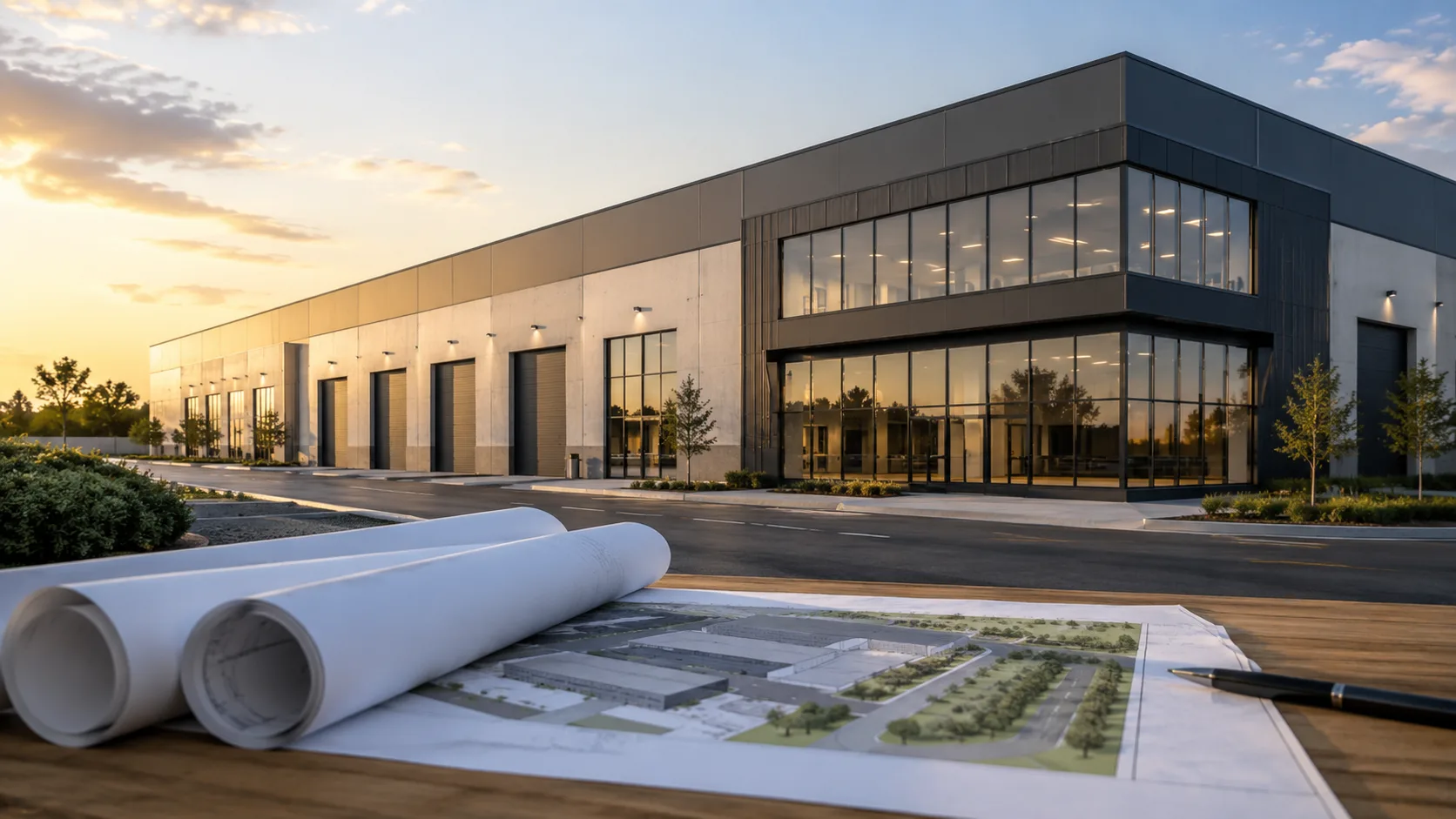
Build-to-suit (BTS), or building "to measure", is a model for delivering commercial investments in which a facility is created for a tenant who is known in advance, along with their specific operational requirements. Instead of erecting a universal hall or a building "for the market" and only then looking for a user, the investor or developer designs and builds the property exactly as the future tenant needs it — from the functional layout, through the height and load capacity of the floor, to the parameters of utilities and automation. In this article we explain what BTS is, who it suits, how the process works step by step, what benefits and risks it carries, and why the role of the general contractor is crucial in this model.
What the build-to-suit model is
In the BTS model, the starting point is not a plot of land and a finished design, but the need of a specific business. The tenant defines the requirements — production, warehouse and office space, the number of docks, technical parameters, energy class — and the investor delivers a ready facility on the basis of a long-term lease agreement. This is what distinguishes BTS from speculative construction, where the developer erects a facility without a signed tenant, counting on commercialization during or after the works.
BTS is sometimes confused with the "owner-occupier" model, in which a company builds a facility to own and use itself. The difference is fundamental: in build-to-suit the investor remains the owner, and the tenant uses the facility on the basis of a lease agreement — most often for 7, 10, or even 15 years. As a result, the user obtains space ideally matched to their processes without freezing capital in real estate.
Who BTS is for
The model works wherever the standard space available on the market does not match the specifics of the business, and the leasing horizon is long and predictable. BTS is most often used by:
Manufacturing companies requiring atypical floor load capacity, hall height, cranes, or technological installations.
Logistics operators and retail chains needing distribution centers with a defined number of docks and internal road layout.
Tenants from the refrigeration, food, and pharmaceutical industries, for whom temperature and hygiene parameters are critical.
Businesses planning expansion or relocation that want predictable leasing costs instead of a capital investment.
Developers and investors seeking a safe rate of return based on a long-term agreement with a reliable tenant.
BTS most often makes sense for facilities above several thousand square meters and for a lease of at least 7–10 years. Only such a scale and length of agreement justify the cost of tailoring a facility to a single user.
How the process works step by step
Delivering a BTS project is a sequence of stages in which business, design, and construction must be bound together by a single responsibility. Below is a typical project flow:
1.
Defining the tenant's requirements and a preliminary functional-use program.
2.
Choosing the location, analyzing the plot's capacity and the development conditions.
3.
Negotiating the lease terms (letter of intent, pre-lease agreement) and the financing model.
4.
Construction and detailed design taking into account individual technical parameters.
5.
Obtaining the building permit and carrying out the works through the general contractor.
6.
Acceptance, obtaining the occupancy permit, and handing the facility over to the tenant.
Stage
What happens
Who is responsible
Concept and lease
Establishing the requirements, location, and lease agreement terms
Investor and tenant
Design
Construction and detailed design to the tenant's parameters
Designer and general contractor
Construction
Carrying out the works, coordinating subcontractors, cost control
General contractor
Acceptance and handover
Acceptance, occupancy permit, commissioning the facility
General contractor and investor
Benefits of the build-to-suit model
The greatest value of BTS is the precise matching of the facility to the tenant's processes — without the compromises typical of "second-hand" space. The tenant receives a building ready for work from day one, with parameters they would not find on the standard market. The investor, in turn, gains an asset secured by a long-term agreement, which translates into predictable cash flow and a higher property value in the event of a future sale.
Full matching of the layout and technical parameters to operational needs.
No freezing of capital on the tenant's side — the cost is spread over the rent.
Predictable, long-term revenue for the investor and a stable valuation of the asset.
A modern, energy-efficient facility meeting current standards and ESG requirements.
The ability to design reserves for the tenant's future expansion and growth.
Planning a facilityin the build-to-suit model?
FREE QUOTE IN 48H
Give us the tenant's requirements and the location — we will prepare a preliminary concept, schedule, and cost estimate for delivery.
BTS is not free of risk and requires conscious management on both sides of the agreement. Because the facility is created for a single user, its alternative use may be limited — which is why the tenant's reliability and the length of the agreement are so important. The most significant areas of risk include rising material costs during construction, delays in obtaining permits, and changes to the tenant's requirements once the works have already begun.
The most common source of disputes in BTS is scope changes (change orders) introduced after the agreement is signed. Ensure a precise description of the subject of the agreement and a clear procedure for pricing changes before construction starts.
These risks can be mitigated through a solid budget with a contingency reserve, an agreement with provisions on price indexation and deadline guarantees, and above all through the choice of an experienced general contractor who will take responsibility for the cost and deadline of the entire undertaking.
The role of the general contractor
In the BTS model, the general contractor is the glue of the entire project. It is the contractor who translates the tenant's business requirements into concrete technical solutions, coordinates designers and subcontractors, keeps an eye on the budget and schedule, and is responsible for the quality of acceptances. A good general contractor gets involved as early as the concept stage — their knowledge of costs and technology helps to avoid solutions that look good on paper but inflate the budget or extend the delivery.
The "design and build" formula, in which the general contractor is responsible for both the design and the construction, is increasingly used. For the investor this means a single point of responsibility, a shorter schedule, and a lower risk of disputes at the interface between design and execution — which, in BTS, where the deadline for handing the facility over to the tenant matters, is of particular importance.
Summary
Build-to-suit is a way to deliver a facility tailored exactly to the tenant's needs, to the benefit of both sides: the user gains ideally matched space without freezing capital, and the investor gains a stable asset secured by a long-term agreement. The key to success is precise requirements, a well-constructed agreement, and a general contractor who will take responsibility for cost, quality, and deadline.
AndrzejCompany owner
In build-to-suit projects, the most important thing is to enter the conversation before the first line of the design is drawn. That is when we truly control the cost and the deadline, and the tenant gets a facility that works from day one.
At SIGVIN we run BTS investments as the general contractor — from concept and design, through construction, to acceptances and handover of the facility. We take responsibility for the budget and schedule, so that the investor and tenant have a single reliable point of contact throughout the entire project.